Why is my fish tank foggy? If you’ve ever asked on your own why your tank is gloomy, and what creates the water in your storage tank to come to be cloudy that read this guide! Turbidity can be an issue for several aquarium proprietors. However, there is no single solution to why your aquarium water is turbid since there is no solitary reason. However, based on the shade and the conditions of the turbid water, the scary reason could be germs blooming during the cycle of moving to a new storage tank, or possibly, as a result of a number of standard reasons. After that, you also need to understand how to take care of a cloudy container
Contents
Why Is My Fish Tank Foggy?
Does your brand-new aquarium unexpectedly have cloudy water after being clear for the very first few days? Don’t worry. A recently set up aquarium is a biological blank slate; there are essentially no extinct forms present on Day One. Within days, a variety of tiny microorganisms will start trying to establish themselves in the tank. The helpful nitrifying germs that filter the water and create stability, as well as balance, couldn’t colonize the system yet, so it’s kind of a free-for-all for a week or so.
A range of free-floating bacteria and also various other germs take advantage of minerals as well as nutrients in the water and begin to multiply unchecked, hence causing the cloudiness. The situation is often worsened as well as worsened when enthusiasts include way too many fish all at once and/or feed excessively, giving these germs an additional food resource.
White/Grayish Water
There are numerous root causes of white or grey water in overcast fish tanks.
Gravel Residue
If your aquarium water becomes fogged with grayish or white cloudiness, the minute you fill a brand-new container, your trouble is likely caused by dirt and dust washing off the new substrate, commonly gravel. The fix for this concern is basic; simply empty your tank, remove the crushed rock, and clean the substrate under running water till the water runs clear.
Dissolved Constituents
If your substratum is clean, but the water is still murky, the trouble is most likely because of high levels of dissolved components, including heavy metals, silicates, or phosphates. Test the tank water utilizing a basic fish tank water screening package, and you’ll most likely find that the water is very alkaline with an alike high pH level. You can generally fix the issue by dosing the water with a tap water conditioner or pH barrier.
In some areas, it might be that the tap water is triggering the problem. You can address that issue by using Reverse Osmosis (RO) water rather than tap water. Most good fish shops offer RO water, or you might choose to get an RO unit, which will certainly be extra affordable if you have a big container or greater than one arrangements.
Bacterial Bloom
If you have a brand-new container as well as the water turns dirty within a couple of days or a week approximately after you set it up, the cloudiness is probably caused by bacterial bloom.
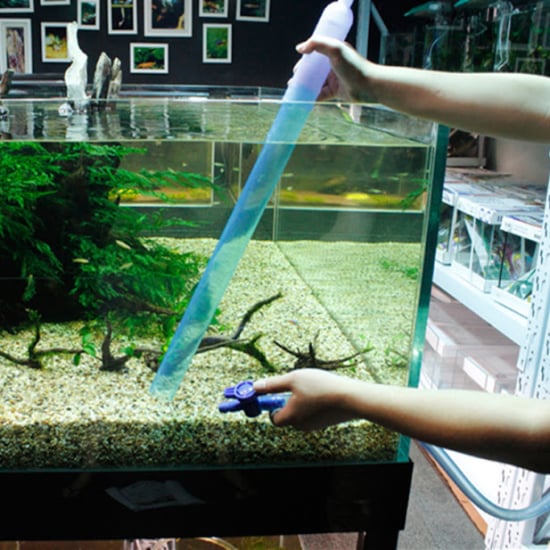
Bacterial bloom, or bacterial blossom, as the phenomenon is also recognized, takes place when a new organic filter system is growing. The trouble usually solves itself over a couple of weeks or months. At the same time, you can help the helpful germs in the biological filter by vacuuming the container completely at least once weekly to get rid of fish waste, leftover food, and plant particles.
Often, decreasing the quantity of food that you offer your fish can help alleviate the problem with the filter system, getting rid of the water as a result.
Don’t Turn Off Your Filter System
You can trigger a microbial bloom by switching off your filter system overnight. Ideally, your filter should be running 24/7/365, as well as you just need to briefly turn it off when you’re maintaining the fish tank, cleansing, or transforming the filter media.
Should I not do anything and let nature take its course?
- Yes! Without a doubt, not doing anything is the best technique for a brand-new aquarium, as long as ammonia and nitrite levels are not on the surge. Cleaning the filter does nothing other than interrupt a minority of useful bacteria that have had a chance to establish. These “good guys” will, at some point, outcompete the cloudy water bacteria for food, starving them out and breaking down their carcasses.
- Water adjustments clear the water temporarily, but in a day or two, the cloudiness comes back, typically also worse than before. That’s because brand-new water supplies a fresh supply of nutrients, creating the overcast water for germs to occupy even more.
- Left alone, the cloudy water microorganisms will ultimately take in all the nutrients in the water as well as die out. This belongs to the biking procedure!
Should I include live plants or other advantageous microorganisms?
- Yes! Live plants have “good” bacteria as well as various other microbes on them, which assist in developing the organic equilibrium in the aquarium.
- Live plants contend for nutrients and also help prevent the growth of microorganisms that create cloudy water. Additionally, they generate oxygen during the day, which helps in the decomposition of fish waste, leftover food, and the overcast water germs as they begin to die off. This third benefit aids in removing the water.
- They also consume ammonia produced by fish as well as leftover food, which can build up in freshly established aquariums till the nitrifying bacteria become developed.
Should I change the water more frequently?
- No! Regular partial water changes are the # 1 thing aquarists should do to be successful, EXCEPT throughout New Tank Syndrome. As discussed above, water modifications might help get rid of the water briefly (24 hours at best), but the cloudiness returns with a vengeance because you have given it a boost of nutrients with the incoming water.
Should I change the filter media or get a brand-new filter?
- No! The big thing in regards to the filter when handling “New Tank Syndrome” gloomy water is don’t tinker with it.
- Cleaning a brand-new filter or changing the cartridge or media does not do anything good, and also potentially removes the excellent microorganisms that are trying to develop. If the filter pad or media needs cleaning quicker than the first 30 days, you might be overfeeding, overstocking, or both.
Beware Big Water Changes!
Many enthusiasts inadvertently trigger bacterial blooms after a huge water change that troubles the fragile eco-balance within the fish tank. Eliminating excessive water from your container can start a mini-cycle when the advantageous bacterial colonies that reside in your storage tank and also in the filter media start to repopulate.
So, stick to executing partial water modifications of around 20% to 25% weekly, and if you need to transform half the water in your storage tank for any reason, be sure to add a filter boosting item to the water.
Green Water
Overcast, eco-friendly water in your fish tank is basically particular to be triggered by algae development in the water. Algae are small aquatic microorganisms that you typically locate expanding anywhere in your fish tank, consisting of on the substrate, glass, decorations, and also on your plants. There are likewise some types of algae that live in the water, drifting about and also providing the water an overcast, green tinge
How To Get Rid Of Algae In Aquarium Water
Doing away with algae in your fish tank is hard once it becomes established. As algae can be caused by several things, you need to use a multi-pronged strike method:
Reduce Excessive Light
Too much brilliant light, specifically sunshine, can encourage algae to expand in your aquarium water. You can limit the development of algae by moving your tank away from sunshine or covering the fish tank with blinds or drapes for the part of the day when the sun is shining on the tank. Also, you need to reduce the hours that your aquarium lights are on, possibly by utilizing a timer.
When the algae are starved of light, they will eventually die off, and your filter system will remove the green algae from the water, leaving it clear once again.
Phosphates
Phosphates that stem from decomposing organic waste matter in the water, as well as from the water resource itself, are efficient plant fertilizers that urge algae to expand. To lower the number of phosphates in the water, start by providing the tank a deep clean, consisting of trimming away dead plant matter and vacuuming the substrate to do away with fish waste and uneaten food.
When that’s done, check your tap water, as that could be the source of the trouble. The Safe Drinking Water Act (SDWA) of 1974 dictates that the U.S. Environmental Protection Agency is duty-bound to chemically treat the domestic water system to make it risk-free for you to use and also drink. That procedure implies that the water is chemically treated, typically resulting in high phosphate levels.
If your domestic supply of water includes high degrees of phosphates, you’ll need to change to using RO water for your fish tank or chemically treat the water to eliminate the phosphates before placing the water in your aquarium.
Nitrates
Nitrates also serve as plant and algal foods.
The levels of nitrates in your fish tank generally rise in direct correlation to fish waste that’s included in the water, and also, preferably, your aquarium water needs to not include greater than 20 ppm (parts per million) of nitrates. As long as you execute partial water modifications of as much as around 30% every week and you keep your filters properly, nitrate levels must be pretty easy to keep under control.
For the organic component of your filter system to work efficiently as well as get rid of nitrates from the water, you need to have a good circulation rate throughout the storage tank. Preferably, you desire a GPH (Gallons Per Hour) circulation rate of at least 4 times the overall volume of water in your tank, ideally a lot more.
Yellow/Brownish Water
Although it’s quite unusual for fish tank water to turn a dirty brown or yellowish shade, that can sometimes occur.
Driftwood
Several enthusiasts use bogwood and driftwood as aquarium decorations. Timber looks very natural, some plant types can be trained to expand on the wood, fish make use of the timber to figure out territories and also utilize it as hiding locations, and colonies of beneficial germs grow on the timber’s surfaces, giving food for fish as well as fry.
Nonetheless, the tannins that the wood contains can leach right into the water, lowering the pH level somewhat, and sometimes turning the water the color of cool tea. Some fish varieties appreciate a “black water” environment because that mimics their natural environment, yet yellow or brownish gloomy water does not look fantastic and makes the container look filthy, which in truth it isn’t.
How To Prevent “Black Water” In Your Fish Tank
You can protect against “black water” from forming in your tank by soaking driftwood or bogwood in a pail for a couple of days before you place the timber right into your aquarium. Of course, any kind of tank design that you buy from a pet dog store ought to be prepared, so you will not have that issue. If you have an activated carbon filter, that will help to remove some of the discolorations, also.
Dried Leaves
A layer of dried-out fallen leaves on the substrate can help to reproduce some fish types’ native environment, giving the tank an Amazonian vibe and also offering somewhere for swarms of microorganisms to grow that can give food for fish and fry.
Dried out leaves likewise leach tannins that will certainly turn the water a brown shade. Unless you wish to produce a “black water” environment, you’ll need to eliminate the fallen leaves to permit the water to become clear again.
How to Avoid Cloudy Fish Tank Water
1. Do not overfeed your fish; follow Aqueon’s pointers for success!
Starting aquarists typically fear their fish will certainly deprive of fatality, so they feed heavily and often. However, there are few, if any kind of, nitrifying germs present to break down the resulting waste or leftover food, which the over-cast water bacteria take advantage of as well as remain to multiply. Also, even worse, unsafe ammonia and nitrite levels might begin to rise. Fish in nature don’t always eat every day, and some aggressive fish might just eat one or two times a week. No fish has ever before been deprived of fatality in three days.
2. Don’t place too many fish in your fish tank.
Overstocking your aquarium is asking for trouble on several levels. A lot of fish packed with each other in a tiny room can create territorial types to come to be very aggressive, and also a lack of personal space creates stress and anxiety, which can additionally cause health issues as well as episodes of illness.
Congesting a fish tank with way too many fish will certainly overload the filter system, overwhelming the useful germs that process waste items, and also resulting in microbial growth as well as cloudy water. You can resolve the trouble by relocating several of your fish to a larger container, carrying out a partial water change, as well as vacuuming the substrate extensively.
3. Add turned-on carbon media to the filter, whether loosened or carbon pads.
Including turned-on, carbon media, or triggered carbon pads to the filter will certainly assist get rid of the water as well as adsorb nutrients that feed the microorganisms bloom.
4. Seed the fish tank.
If you have access to an additional healthy and balanced, well-established aquarium, adding a couple of handfuls of gravel from that fish tank will certainly seed the useful bacteria and quicken the clearing procedure. Marine shops occasionally keep filter cartridges, bio-sponges, as well as wheels drifting in equipped aquariums to seed them with germs and will certainly send these items home with brand-new arrangements to assist obtain the biological balance going. This has the same result as including gravel from a well-known tank.
5. Check your fish tank water.
Have fish tank water evaluated for ammonia and nitrite as soon as the water begins to turn gloom. In a lot of circumstances, the degrees will be no, implying there is no cause for the problem.
We understand that seeing gloomy water in a brand-new fish tank can be alarming. However, the very best guidance is to be a client and wait it out. Do not include any more fish, feed moderately as soon as every other day, have your water checked, and also just leave the filter alone for the time being.
Finally
So, if your fish tank water turns overcast, you’ll need to do some investigative work to figure out the root cause of the trouble. New tanks might turn overcast since they have not cycled before fish were presented, bringing about the microbial bloom. If the storage tank is as well vibrantly lit for too long or subjected to route sunlight, floating algae might grow, transforming the water green.
Finally, if you have bogwood, driftwood, or dried fallen leaves in your container to provide it an all-natural appearance, you might unintentionally create a black water environment where the water transforms a yellowish brownish shade as a result of tannins that have seeped into the water.
We hope you enjoyed our overview on making your aquarium water cloudy; however, if you have any type of concerns or suggestions, put them in the comments below! Visit our homepage to see more: Champagnereef.com
Further reading: